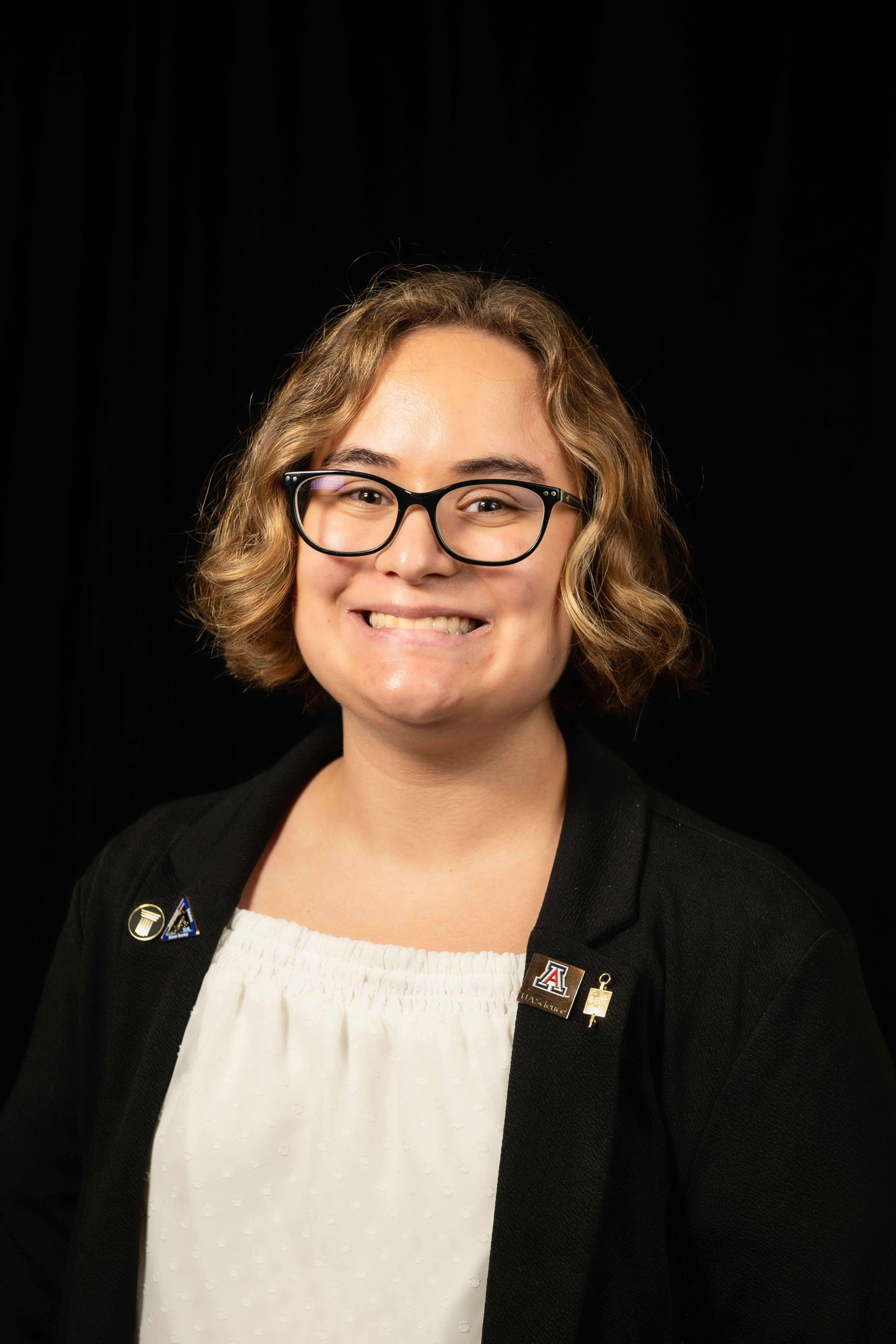
About Me
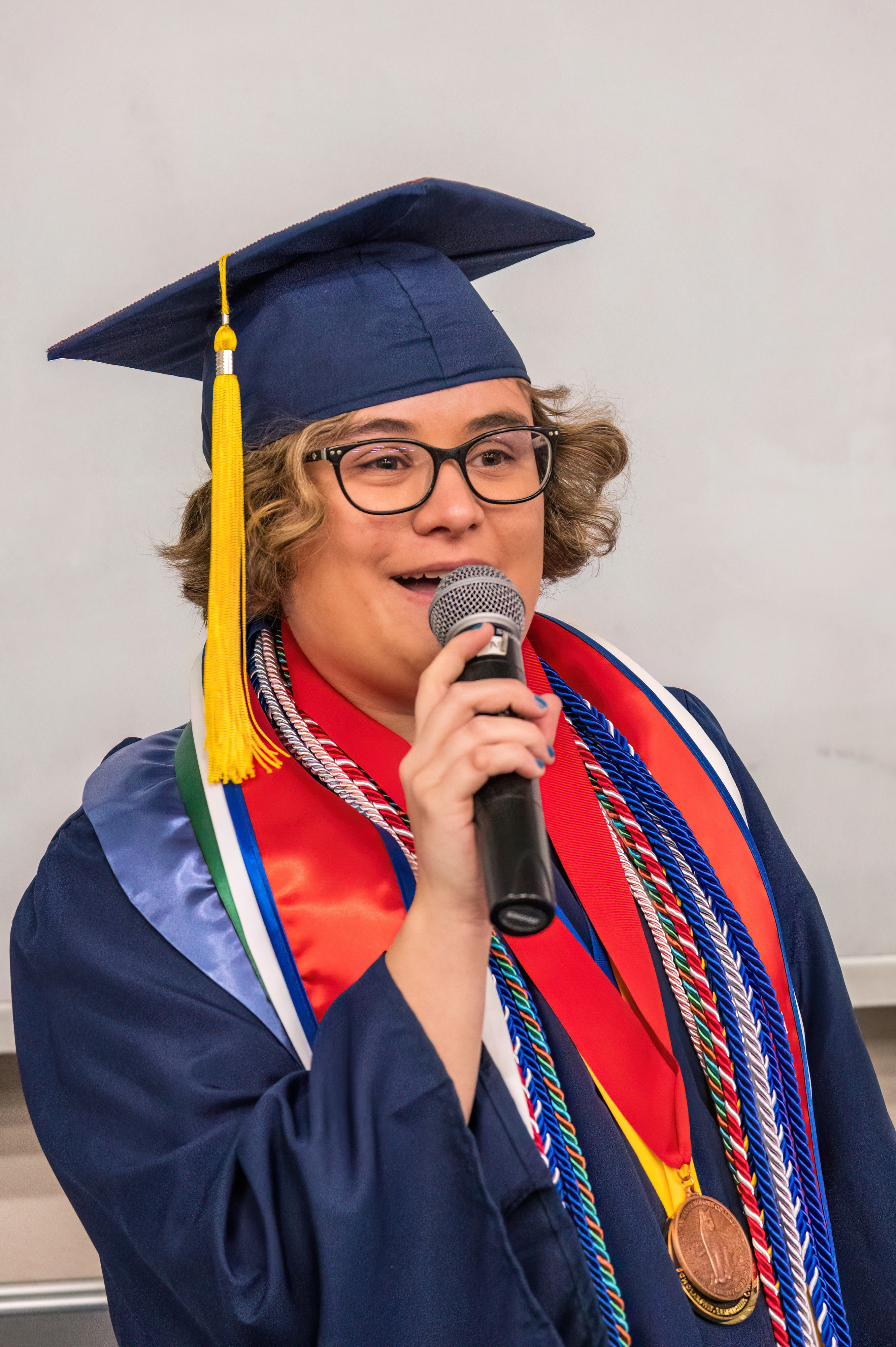
Education: I'm a 3rd-year Ph.D. Student in Physics with an Astrophysics Concentration at the University of New Mexico and a Zancada Graduate Fellow. I completed my Bachelor of Science in Astronomy and Physics at the University of Arizona, with Honors in Astronomy, in May 2024.
Research Interests: I am conducting research on exoplanet atmospheres with JWST, and previously engaged in research in astronomy education and science literacy. See the Research page for more details on my past and current research!
Hobbies and Other Interests: When I'm not in classes or working on research, I enjoy playing percussion in local concert bands in Albuquerque, playing and teaching curling (yes, the Olympic sport everyone loves), and reading!
Research
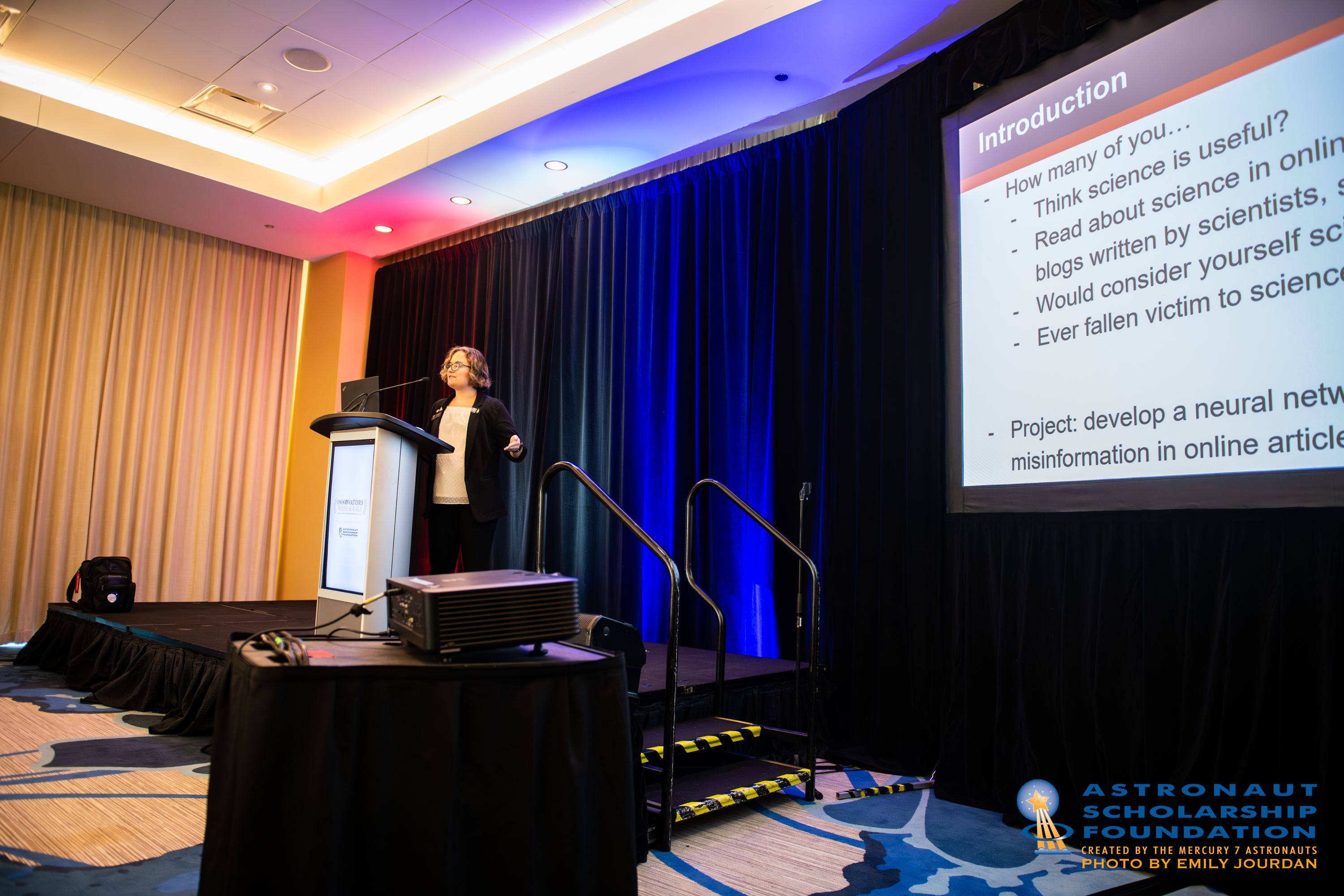
Publications: See my ADS link here and Google Scholar link here!
Selected posters and presentations are linked in my CV!
Atmospheric Composition of Inner Sub-Neptunes With and Without Outer Giant Companions
As part of my dissertation, I will be analyzing transmission spectra of sub-Neptunes observed with NIRISS and NIRSpec on JWST to determine if having an outer giant planet in the system with the sub-Neptune affects the atmospheric composition when compared with the atmospheres of sub-Neptunes without an outer giant planet.
Unveiling the Links Between M-Dwarfs and Their Planets with Machine Learning
I am also exploring a secondary dissertation project using machine learning to improve and expand elemental abundance measurements of M-dwarf stars. I also intend to compile the results from this pipeline into a homogeneous abundance catalog and an analysis of whether rocky planets around M-dwarfs reflect the composition of their host stars.
Analyzing JWST Observations of the Exoplanet LTT 9779b
My pre-candidacy project at the University of New Mexico is leading the analysis of transmission spectrum data from the NIRSpec instrument on JWST to learn more about the atmosphere of this exoplanet that's part of the hot Neptune desert. This project was partially funded by a New Mexico Space Grant Graduate Research Fellowship in 2025-2026. I am currently working on a first-author paper to be published soon, and have been a part of papers detailing other portions of the observation.
Outreach
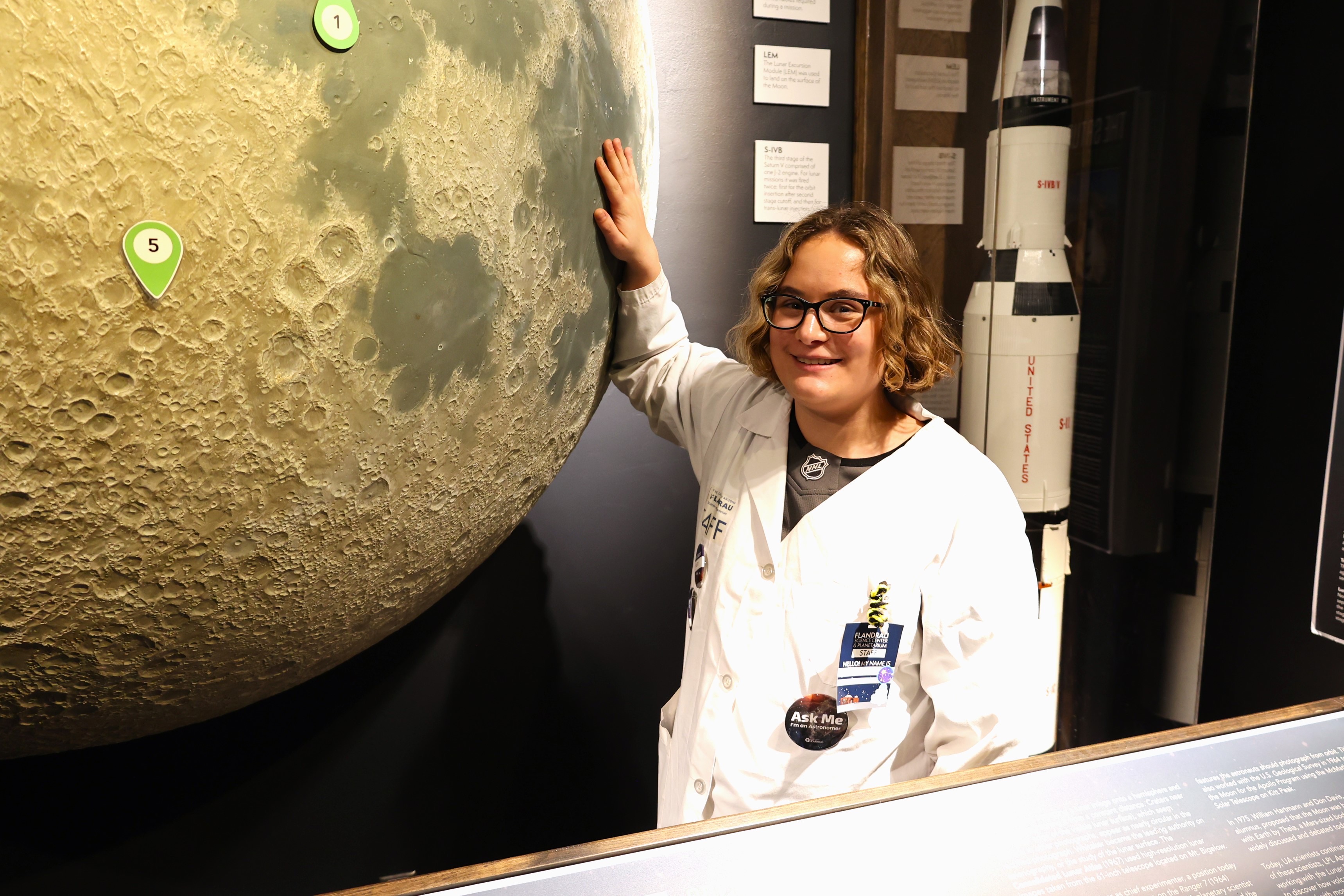
Teaching: I was a TA for the Introductory Astronomy Lab (3 semesters) and Physics of Music lecture (1 semester) at UNM. I aimed to foster an approachable and supportive classroom environment where students feel comfortable asking questions and engaging with challenging material. Evaluations from my students consistently highlighted my patience, clarity, and willingness to walk through concepts step-by-step, as well as my prompt feedback and emphasis on interactive, hands-on learning, reflecting my commitment to helping students build confidence and understanding in scientific problem-solving. For my work as a TA, I received the 2025-2026 William G. Larsen, PhD, Memorial Award for Best Teaching Assistant.
Outreach: At UNM, I am a Volunteer Telescope Operator for some of the Campus Observatory's Friday night open houses. I am a part of the organizing team for Astronomy on Tap-Albuquerque, focusing primarily on managing their social media. I have also judged high school and undergraduate research projects, and given outreach talks to local elementary students and at Space Center Houston during graduate school.
Diversity, Equity, & Inclusion: I've been involved in leadership roles in our Physics and Astronomy Graduate Student Association and Women in Physics, Astronomy, and Optics. I am the current Meeting Manager for WiPAO and the current GSA Co-President.
Contact
Email: sstamer@unm.edu